
servizi

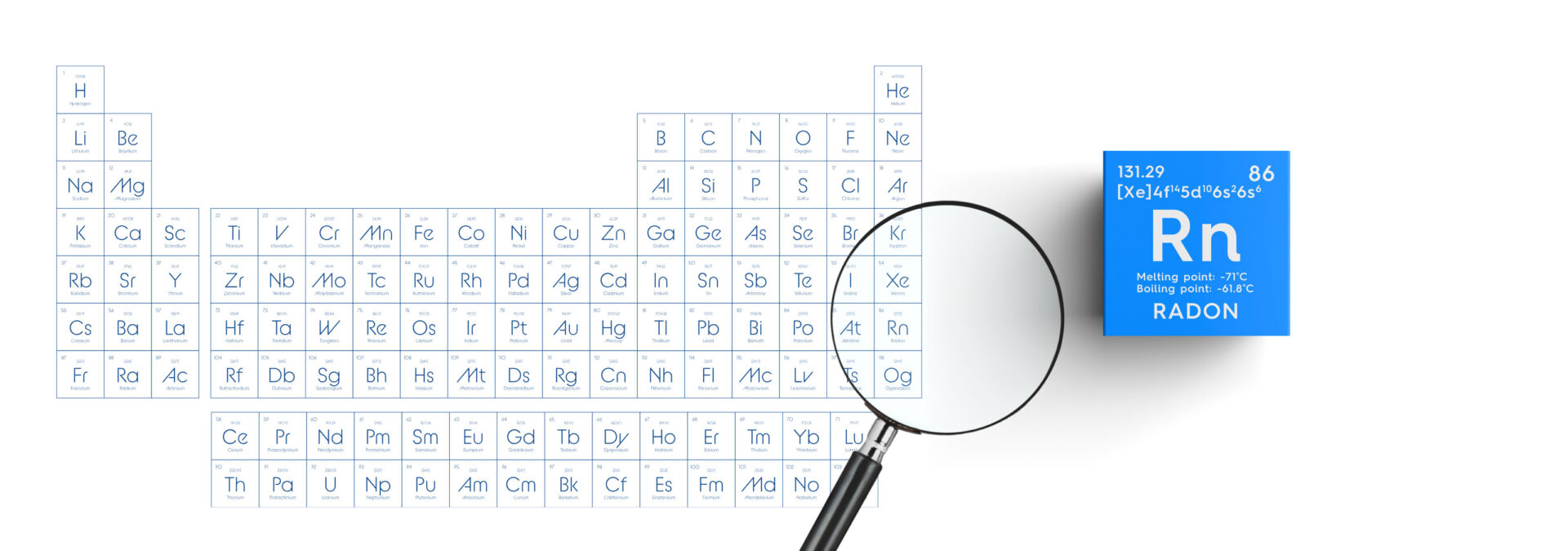
Radon

Radon gas is one of the main health risks and is recognized by the World Health Organization (WHO) as the second leading cause of lung cancer worldwide. Odorless, colorless, and tasteless, radon is a naturally occurring radioactive gas produced by the decay of uranium present in soil and rocks. Its danger lies in its ability to infiltrate living and working spaces, accumulating in enclosed environments where it is inhaled by occupants.

Addressing the radon issue is a challenge that must be tackled both in the construction of new buildings (prevention) and in the remediation of existing ones (mitigation). Mitigation measures must be planned based on accurate measurements, as building codes alone cannot automatically guarantee that radon concentrations fall within safe limits.

Numerous scientific studies have shown that even relatively low levels of radon exposure can significantly increase the risk of developing lung cancer, an effect that is greatly amplified in smokers or former smokers. Long-term exposure to this gas, especially in homes and workplaces, therefore represents a real and concrete health risk.

The concentration of radon gas can depend on several factors, including soil type, geographic location, building materials, and HVAC characteristics. However, the phenomenon can be prevented and mitigated through a combination of monitoring strategies, remediation measures, and proper risk management information.

Radon and Building Safety: The Importance of Prevention and Remediation


Mitigation measures must be planned based on accurate measurements, as building codes alone cannot automatically ensure that radon concentrations remain within safe limits.

Prevention Strategies in New Constructions


Integrating radon protection systems during the design phase of a new building is the most effective way to minimize risks. Strategies include:

  • Waterproofing foundations and underground walls to reduce the infiltration of  radon gas into indoor environments.
  • Use of low-radon-emission construction materials to prevent the building itself from becoming a source of exposure.
  • Installation of appropriate ventilation systems that promote effective air exchange and prevent the buildup of radon gas.

Remediation of Existing Buildings


In already constructed buildings, corrective measures can significantly reduce radon concentrations. Effective interventions include:

  • Sub-slab depressurization systems that intercept radon before it enters the building.
  • Enhancing natural and forced ventilation to improve air exchange between indoors and outdoors.
  • Sealing cracks and gaps in floors and walls to reduce entry points for the gas.

LB Servizi: Leader in Radon Dosimetry


LB Servizi, ACCREDIA-accredited according to UNI EN ISO/IEC 17025:2018, is a national reference point for accredited measurements and radon risk management, offering advanced solutions for monitoring and mitigating exposure to this radioactive pollutant.

Through the use of innovative technologies and a team of specialists in dosimetry, LB Servizi supports public institutions, companies, and private clients in the assessment and management of radon risk. We ensure full metrological traceability of measurements, compliance with current regulations, and the highest level of safety for both people and the environment.

LB Servizi already meets all requirements under Article 155 of Legislative Decree 101/2020 for recognition as a Measurement Organization in the field of ionizing radiation. These requirements include the use of appropriate measurement instruments, compliance with good practice standards, employment of highly qualified personnel, and adherence to minimum criteria established by the decree.

Advanced Measurement Methodologies
 

To accurately determine the average radon activity concentration in air, LB Servizi employs three ACCREDIA-accredited measurement methodologies, selected based on specific monitoring needs:

  • CR-39 System: This technology uses a diffusion chamber containing a nuclear track detector in PADC (Poly Allyl Diglycol Carbonate). Once exposed to radon, the detector records interactions with alpha particles emitted during decay. This method is particularly suited for long-term monitoring and assessment of chronic indoor exposure. Measurements are performed under accreditation and in accordance with UNI ISO 11665-4:2021 (excluding chapter 6).
  • EIC (Electret Ion Chamber) System: Known in Italy as the “Electret Ion Chamber System,” this method measures the change in electric potential generated by interaction with radon to quantify its concentration. It is valued for its accuracy and ability to provide reliable data more quickly than the CR-39 method. Measurements are performed under accreditation and in accordance with UNI ISO 11665-4:2021 (excluding chapter 6).
  • Active Radon Measurement: In addition to the passive systems, LB Servizi has advanced instrumentation for real-time active measurements, including the proprietary ARMS (Active Radon Monitoring System). This technology allows instant measurements of radon in air, soil, and water, providing immediate concentration data and enabling prompt interventions if safety thresholds are exceeded. Measurements are performed under accreditation and in accordance with ISO 11665-5:2020 and ISO 11665-1:2019.

Why Choose LB Servizi?


Choosing LB Servizi means relying on a partner that combines expertise, innovation, and responsibility in radiological safety management. Our experience in radon dosimetry allows us to offer tailored solutions for any context, providing full support from initial measurement to consultation on implementing effective mitigation strategies.

LB Servizi provides ACCREDIA-accredited measurement services for all methodologies used and is already compliant for future recognition as a Dosimetry Service and Measurement Organization under Article 155 of Legislative Decree 101/2020.

Our Strengths:

  • Advanced technologies for reliable, precise measurements with metrological traceability.
  • ACCREDIA-accredited measurements.
  • Detailed analyses and comprehensive mapping for a complete and accurate risk assessment.
  • Expert consultancy for public institutions, companies, and private individuals.
  • Prevention and remediation interventions to improve indoor air quality.

Guaranteed compliance with current regulations (qualified laboratory as a Dosimetry Service) and support in mandatory administrative procedures.

Certifications
Certifications

Compilando questo form, si accettano le condizioni d'uso e la privacy policy del sito web, acconsentendo al trattamento dei propri dati personali secondo le specifiche indicate nel documento.

privacy policy
  • Radon Dosimetry

    LB Servizi offers three ACCREDIA-accredited technological solutions to determine the average radon gas activity concentration in air, using state-of-the-art instruments that ensure precise, reliable measurements with metrological traceability.

    LB Servizi guarantees high measurement accuracy through a careful calibration process and periodic verification of the equipment, achieving highly reliable results.

    CR-39 System

    The CR-39 system is based on a diffusion chamber designed to allow only radon gas to enter, preventing interference from its decay products. The chamber volume is optimized to maximize the detector’s efficiency in capturing alpha radiation emitted by radon and its progeny.

    The sensitive element is a PADC (Poly Allyl Diglycol Carbonate) track detector, commercially known as CR-39. Each detector, assembled and ready to use, is identified by a unique alphanumeric code engraved directly on the sensitive area and also displayed externally, ensuring maximum traceability and reliability of measurements.

    EIC (Electret Ion Chamber) System

    The EIC system, also known as the “Electret Ion Chamber System,” is a well-established and highly reliable technology for radon gas measurement. It consists of a Teflon disc charged electrically through a process that maintains a permanent charge. This disc is mounted on a plastic support, allowing its use in chambers of different volumes, making it adaptable for monitoring periods ranging from a few days to several months.

    The simplicity and reliability of the EIC system make it an ideal solution for environmental radon monitoring in diverse contexts.

    Active Measurement System

    Active measurement systems are portable electronic instruments that sample air and measure radon gas concentration in real time. This technology allows for:

    • Assessing radon concentration variations according to environmental conditions (heating, ventilation, humidity).
    • Monitoring radon trends over short periods to identify fluctuations and critical points.
    • Measuring radon concentrations specifically in soil and water.

    Integration with advanced components makes these instruments particularly effective for detailed analysis and for defining customized mitigation strategies.

    LB Servizi owns the ARMS (Active Radon Monitoring System), a dedicated system for monitoring and controlling radon gas activity concentration in air. 

    Each device allows for instantaneous and continuous measurement of radon in air and is connected to a data concentrator managed by a digital platform. This platform can control the devices and integrate them with radon mitigation systems (switches that activate ventilation systems based on radon concentration measured every 10 minutes).

    The radon measurement service can be combined with consultancy from the Radon Remediation Expert (EIRR) and the Radiation Protection Expert (EdR) to perform specific evaluations of worker exposure levels and to verify the effectiveness of implemented radon remediation techniques.

    ARMS Active System

    • Accreditation Range: 5 – 3700 Bq/m³
    • Standards: ISO 11665-5:2020 + ISO 11665-1:2019

  • Radon Dosimetry – Puglia

    Regulatory References

    Regional Law 3 November 2016, n. 30 – “Rules on reducing exposure to natural radioactivity from radon gas in enclosed environments” – establishes the obligation to measure radon gas in all publicly accessible places across the Puglia region.

    The regulation was subsequently amended by Article 25 of Regional Law 36/2017 of 9 August 2017 (published in BURP n. 96 of 11 August 2017).

    Regulatory Update: Identification of Priority Areas (2025)

    The Puglia Region, through Resolution G.R. n. 1523/2025 and publication in the Official Gazette n. 269 of 19 November 2025, approved the “First identification of priority areas” for radon gas exposure, pursuant to Article 11, paragraph 3 of Legislative Decree 101/2020 and subsequent amendments.

    The regional regulation aligns with national provisions and strengthens preventive measures in the most exposed areas.

    Municipalities identified as PRIORITY AREAS:
    CASARANO, SURBO, MINERVINO DI LECCE, CAMPI SALENTINA, MAGLIE, ZOLLINO, COPERTINO, LECCE

    Key regulatory update: measurement of radon is now mandatory in all workplaces located on the ground floor, basement, and underground levels in municipalities identified as priority areas.

    Measurement Obligations for Different Types of Buildings

    Strategic and Educational Buildings
    According to D.M. 14.01.2008, strategic buildings, including schools of all levels, nurseries, and kindergartens, must comply with a maximum radon concentration of 300 Bq/m³ in enclosed spaces.
    Measurements must be carried out exclusively using passive instrumentation.

    Basements, Semi-Basements, and Ground-Floor Rooms
    In buildings other than schools or strategic buildings, but still accessible to the public (excluding residential buildings and isolated technical rooms serving utility systems), the maximum radon concentration is also set at 300 Bq/m³, measured with passive instruments.

    Rooms on the ground floor with an area of less than 20 m² are exempt from measurement obligations, unless they are structurally connected to other rooms, exceeding the dimensional limit. To qualify for exemption, rooms must also have adequate ventilation.

    Radon Gas Measurement Methods

    Radon gas concentration is measured using CR-39 nuclear track detectors, a highly reliable passive instrumentation technology.

    Measurement process:

    1. Detector placement: installed at a height of 1–3 meters above the floor, away from heat sources and artificial ventilation.
    2. Monitoring period: one full year, divided into two semesters:
      • Spring–Summer
      • Autumn–Winter
    3. Collection and analysis: at the end of the exposure period, detectors are collected and analyzed to determine the annual average radon concentration.

    Obligations for Communicating Results

    At the end of the measurement campaign, LB Servizi prepares and transmits the official report to the following authorities:

    • Relevant Municipality
    • ARPA Puglia (Regional Agency for Environmental Protection of Puglia)

    The notification must be submitted within one month from the completion of the measurement.

    Penalties for Non-Compliance

    If measurements are not submitted within 18 months from the entry into force of the regional law, the Municipality will issue an ordinance requiring compliance, granting a maximum additional period of 30 days.
    If the data is still not submitted within this period, the building’s occupancy certification may be suspended.

    Further Informations

    For more details on regulations and technical requirements:

    For any additional needs, LB Servizi provides technical support and consultancy on in managing radon – related risk.

  • Radon Remediation Expert

    Legislative Decree 101/2020 and subsequent amendments, through Article 12, establishes new maximum reference levels for the annual average radon concentration in air, applicable to both residential buildings and workplaces.

    Maximum Radon Concentration Levels

    • 300 Bq/m³ for existing residential buildings
    • 200 Bq/m³ for residential buildings constructed after 31 December 2024
    • 300 Bq/m³ for workplaces

    If the allowed levels are exceeded in workplaces, the business owner is obliged to implement corrective measures, relying on a Radon Remediation Expert (Article 15).

    Our Expertise at Your Service

    The Radon Remediation Expert is a qualified professional with specific training and experience, capable of providing technical guidance for implementing corrective measures to reduce radon concentration in indoor environments.

    With LB Servizi, you will have certified professionals at your side, ready to assist in cases where predefined values are exceeded, providing consultancy for the remediation and mitigation of radon gas in both workplaces and private residences.

    International References on Radon Mitigation

    The World Health Organization (WHO), in 2009, published a manual analyzing issues related to radon in indoor environments and summarizing the main strategies for its reduction.

    Below is a comparative table illustrating intervention methods for mitigating radon in new constructions.Source: Handbook on Indoor Radon – A Public Health Perspective (World Health Organization, 2009)